The Psychology Behind Casino Spins: Why RTP and Volatility Matter More Than You Think
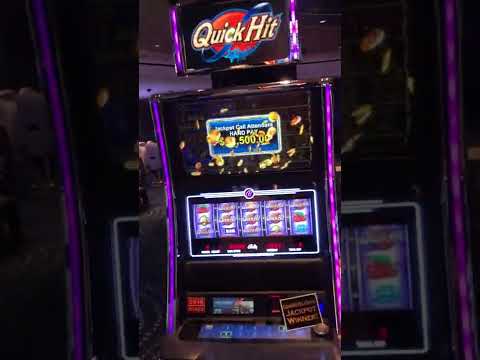
The allure of slot machines lies not just in their flashing lights and soaring jackpots, but in the way they exploit fundamental psychological triggers—especially those tied to the allure of chance and the thrill of potential reward. At the heart of this phenomenon is the fortunica casino spins experience, where the randomness of spins becomes a psychological battleground between player expectation and the machine’s built-in mechanics. Understanding how these mechanics influence behaviour—particularly the return-to-player (RTP) percentages and volatility—can reveal why some slots are far more addictive than others, and why operators design them this way.
RTP, the percentage a casino expects to return to players over time, is often presented as a neutral statistic, but its psychological impact is profound. A slot with an RTP of 96% may seem generous, but its volatility—how often it pays out—can make it feel like a gamble between a long dry spell and a sudden, life-changing win. High-volatility slots, for instance, offer bigger payouts but less predictability, which aligns with the human tendency to seek out uncertainty as a form of excitement. Meanwhile, low-volatility slots with steady but modest returns can feel more “safe,” yet they rarely trigger the same dopamine spikes that draw players back. The key insight here is that casinos don’t just design for profit; they engineer the experience to keep players hooked by balancing these psychological levers.
Data from the UK Gambling Commission underscores this dynamic. Between 2021 and 2022, slots accounted for 49% of all gambling losses in England and Wales, with online slots driving a significant portion of that figure. The commission’s reports highlight that slots with progressive jackpots—where each spin contributes to a larger prize pool—are particularly effective at attracting repeat players, as the perceived chance of a life-changing win keeps the game fresh. Meanwhile, studies from the University of Cambridge’s Behavioural Science Unit suggest that players are far more likely to continue playing when they experience “near-misses”—where the machine almost pays out but doesn’t—than when they win outright. This “near-miss effect” is a deliberate tactic in slot design, designed to prolong engagement by making players feel they’re “close” to success.
Yet the most compelling statistic comes from behavioural economics research. A 2019 study published in the Journal of Behavioral Finance found that players tend to underestimate the true odds of winning when presented with a slot’s RTP, often assuming it’s higher than advertised. This cognitive bias—known as the “probability neglect” heuristic—means that a 95% RTP slot might feel like a 98% chance of winning, inflating the perceived value of play. For operators, this creates a paradox: while they must comply with regulatory RTP limits, the way they frame the experience—through spin speed, sound effects, and visual feedback—can manipulate player perception to maximise engagement. The result is a system where the machine’s mechanics are secondary to the psychological narrative it tells.
How Slot Mechanics Reinforce Addiction
The design of modern slots is a masterclass in behavioural engineering, weaving together three key components: variable reward schedules, immediate feedback loops, and the illusion of control. Variable reward schedules—where outcomes are unpredictable—mirror the unpredictability of real-world events, triggering the brain’s reward system in a way that fixed rewards do not. This is why slots with random-number-generation (RNG) systems, which simulate true randomness, are more addictive than those with pseudo-random sequences. The immediate feedback of a spinning reel, coupled with the anticipation of a payline, creates a dopamine-driven cycle of desire and release, much like gambling in general. Even the speed at which a spin completes—often set to mimic the “thrill of near-misses”—can influence how players perceive their chances of success.
One of the most insidious aspects of slot design is the way it exploits the “gambler’s fallacy.” Players often believe that after a long streak of losses, a win is “due,” even when the underlying probability remains unchanged. This misconception is reinforced by the slot’s visual cues—such as flashing lights or a “big win” indicator—even when no payout has occurred. Operators leverage this by designing slots with “hot streaks” and “cold streaks,” where the machine subtly shifts its payout patterns to keep players guessing. For example, a slot might have a 10% chance of a small win and a 1% chance of a jackpot, but the operator may adjust these probabilities over time to create the illusion of fairness, further entrenching the player in the cycle of play.
Regulatory Challenges and Ethical Dilemmas
The relationship between slot design and player behaviour has become a contentious issue in gambling regulation. The UK’s Gambling Commission has recently tightened rules around slot promotions, particularly those that encourage “chasing losses,” a practice linked to increased problem gambling. In 2023, the commission introduced stricter limits on progressive jackpot sizes and required operators to implement “responsible gaming” features, such as time-outs and deposit limits, for high-risk players. Yet critics argue that these measures are reactive rather than preventive, as the fundamental design of slots—with their high volatility and near-miss triggers—remains largely unchanged. The challenge for regulators is balancing consumer protection with the economic viability of the industry, where slots account for over £1 billion in annual revenue in the UK alone.
- According to the UK Gambling Commission, slots accounted for 49% of all gambling losses in England and Wales between 2021 and 2022, with online slots driving 62% of those losses.
- A 2019 study in Journal of Behavioral Finance found that players underestimate RTP by an average of 15%, assuming slots return 2–3% more than advertised.
- The “near-miss effect” occurs in 50% of slot spins where the player is within one reel spin of a payline, yet only 10% of spins actually result in a win.
- Progressive jackpot slots have a 30% higher retention rate among players compared to fixed-pool slots, according to data from the International Gaming Technology.
- Casinos spend up to 20% of their marketing budget on promotions targeting slot players, with near-miss triggers being the most effective psychological tool.
The future of slot design may lie in “responsible gaming” innovations, such as AI-driven personalisation that adjusts volatility based on player behaviour, or blockchain-based slots that offer more transparent RNG systems. However, without fundamental changes to the psychological triggers at play, the addictive nature of slots will persist. The real question is whether regulators and operators will prioritise player welfare over profit—or if the industry will continue to evolve in ways that keep the game as addictive as ever.